
Employee Benefits Market Check Survey: Fiduciary Responsibilities

Starting in 2024, several lawsuits targeted large employers and their fiduciary responsibilities, with particular focus on pharmacy benefit oversight. While those cases were ultimately dismissed, they heightened awareness and scrutiny of employer fiduciary practices. Earlier this year, a new wave of litigation emerged, expanding that focus to include voluntary benefit programs.
As the spotlight on fiduciary roles is expected to remain intense, we sought to better understand how employers were prioritizing their fiduciary duties. We conducted a survey on February 19 to gather those answers. These responses add further insights to questions we posed to employers last year about their fiduciary processes. The following summarizes the responses.
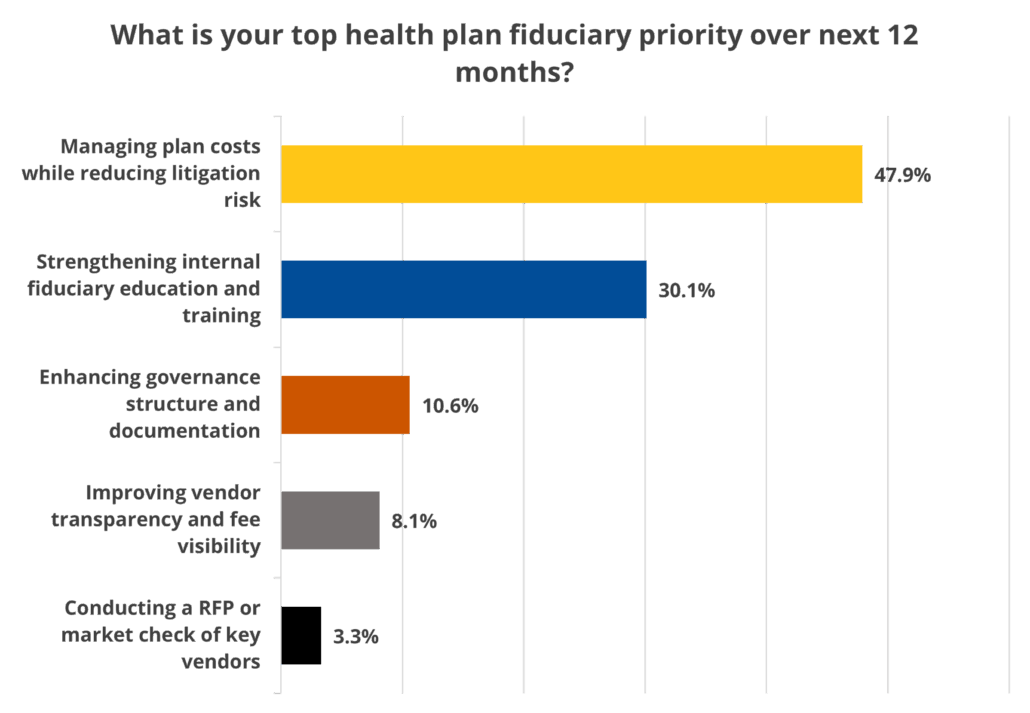
*Results based on 123 employer respondents.
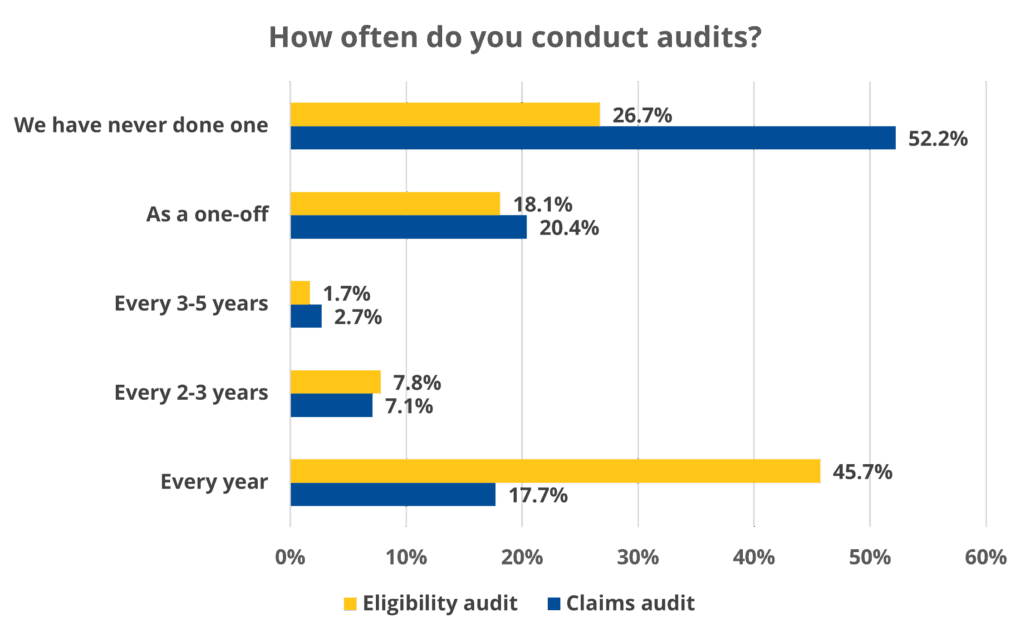
*Results based on 116 employer respondents.
Key Findings
Employers are increasingly prioritizing fiduciary strategies that balance cost management with litigation readiness, reflecting a shift toward more proactive oversight. The strong emphasis on managing plan costs while reducing legal exposure underscores that fiduciary responsibility is now viewed as both a financial and an enterprise priority. At the same time, the focus on strengthening internal fiduciary education signals an effort to build greater accountability and informed decision-making. This foundation is critical, but it must be supported by clear governance, defined ownership, and consistent documentation to ensure fiduciary responsibilities are carried out effectively.
Audit practices, however, reveal a meaningful gap between fiduciary intent and operational execution. While many employers conduct eligibility audits regularly, claims audits occur far less consistently, leaving potential gaps in financial oversight and vendor accountability. Regular audits provide greater visibility into plan performance, help identify errors or inefficiencies, and strengthen an employer’s ability to demonstrate prudent fiduciary management. Conversely, infrequent or one-time audits may limit visibility into ongoing plan performance and reduce opportunities to improve plan accuracy, cost control, and overall governance.
Moving forward, organizations that pair fiduciary education with consistent audit and monitoring practices will be best positioned to reduce risk, control costs, and demonstrate a disciplined fiduciary framework.
Should you have any questions regarding any of this information or want to discuss your fiduciary obligations, please contact your local Assurex Global adviser.


Leave a Reply
Want to join the discussion?Feel free to contribute!