
Employee Benefits Market Check Survey: Health Plan Fiduciary Approach

Employers that sponsor employee benefit health and welfare plans have always had responsibilities as ERISA fiduciaries. The Consolidated Appropriations Act (CAA) of 2021 contained additional rules pertaining to fiduciary obligations, and recent class action lawsuits have further highlighted the importance of the fiduciary role.
We conducted a survey on June 26 to understand how employers currently view their role as health plan fiduciaries. The results are summarized below.
Which best describes your organization’s current approach to health plan fiduciary oversight?
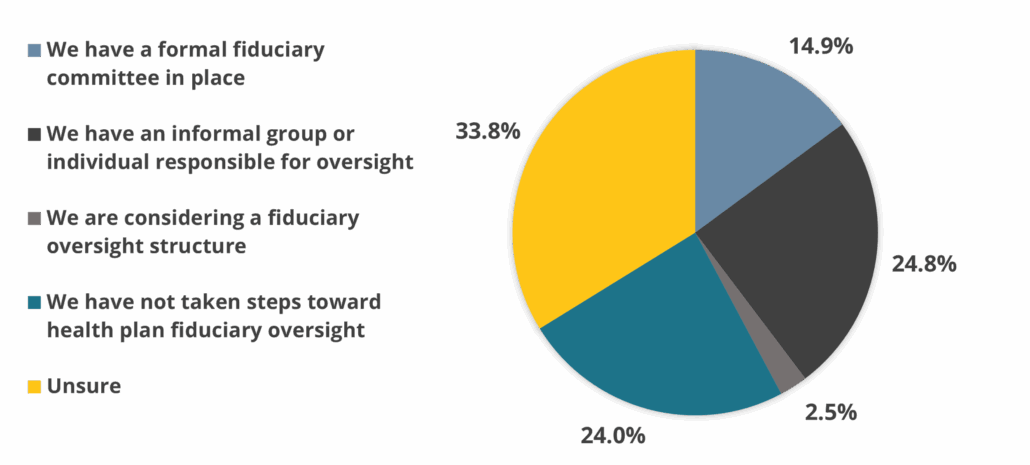
*Results based on 121 employer respondents.
Fiduciary Duties Reminder
Duty of Loyalty – Act solely in the interest of plan participants.
Exclusive Benefit – Act for the exclusive purpose of providing plan benefits.
Duty of Prudence – Act with the care, skill, prudence, and diligence that a prudent person acting in a like capacity would.
Duty to Plan Adherence – Follow the plan documents.
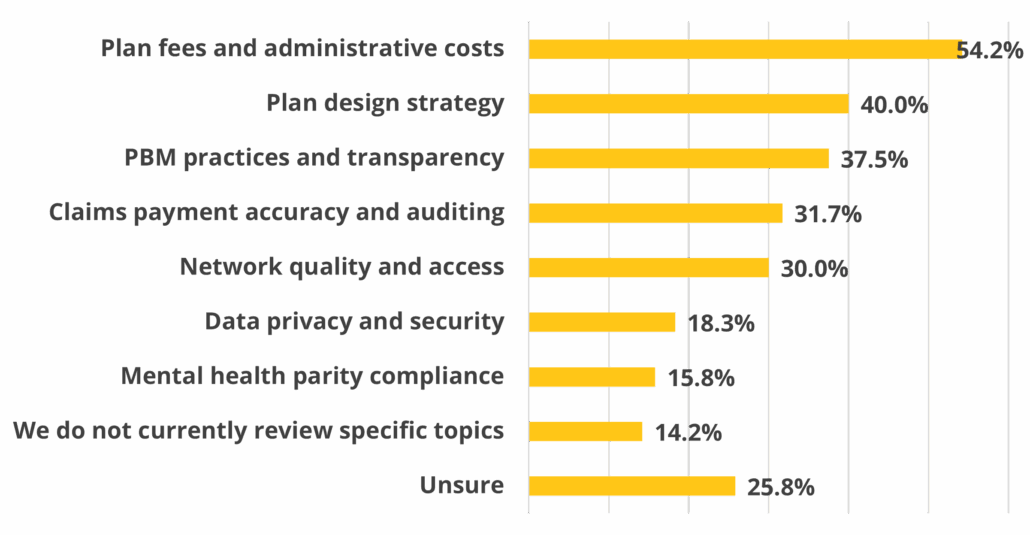
What topics does your company typically review as part of its health plan fiduciary responsibilities?
Key Findings
These poll results highlight that while some employers are taking meaningful steps to fulfill their health plan fiduciary responsibilities, many have room to grow. Just under 15% of respondents have a formal fiduciary committee in place, and about a quarter have an informal structure or individual handling oversight. However, more than half either haven’t taken any steps, are considering what to do next, or are simply unsure, underscoring the need for greater awareness and action.
It’s encouraging to see that many employers are focusing on critical fiduciary areas like plan fees (54%), plan design (40%), and pharmacy benefit management transparency (38%). Selecting and monitoring plan vendors is one of the most important responsibilities of an employer. Lower response rates for topics like data privacy and security (18%) and mental health parity compliance (16%) suggest that important fiduciary risks may be overlooked. Notably, about 14% do not review any specific fiduciary items, and over a quarter are unsure of what they monitor—an exposure that could create compliance and legal challenges.
As fiduciary duties for health plans receive more attention through legislation and litigation, it’s clear that employers should re-examine their oversight structure and practices. Establishing clear accountability, conducting regular reviews of plan costs and services, and ensuring transparency with vendors are key steps to managing risk and acting in employees’ best interests. For many employers, now is the time to move from informal conversations to a formal, documented approach to health plan fiduciary responsibility.
Should you have any questions regarding any of this information or want to discuss your role as health plan fiduciary, please contact your local Assurex Global adviser.


Leave a Reply
Want to join the discussion?Feel free to contribute!