
Employee Benefits Market Check Survey: Men’s Mental Health Awareness

June is Men’s Mental Health Awareness Month, making it an appropriate time to explore how employers are addressing this important aspect of employee well-being. While mental health continues to be a significant driver of healthcare utilization and costs, men often face unique barriers to seeking support, including stigma and a reluctance to ask for help. Employers have an opportunity to foster a workplace culture where all employees feel comfortable accessing the mental health resources they need.
We conducted several polls on June 18 to better understand how organizations are approaching men’s mental health, and the insights that follow summarize the responses.
*Results based on 117 employer respondents.
*Results based on 115 employer respondents. Allowed to select multiple responses.
Key Findings
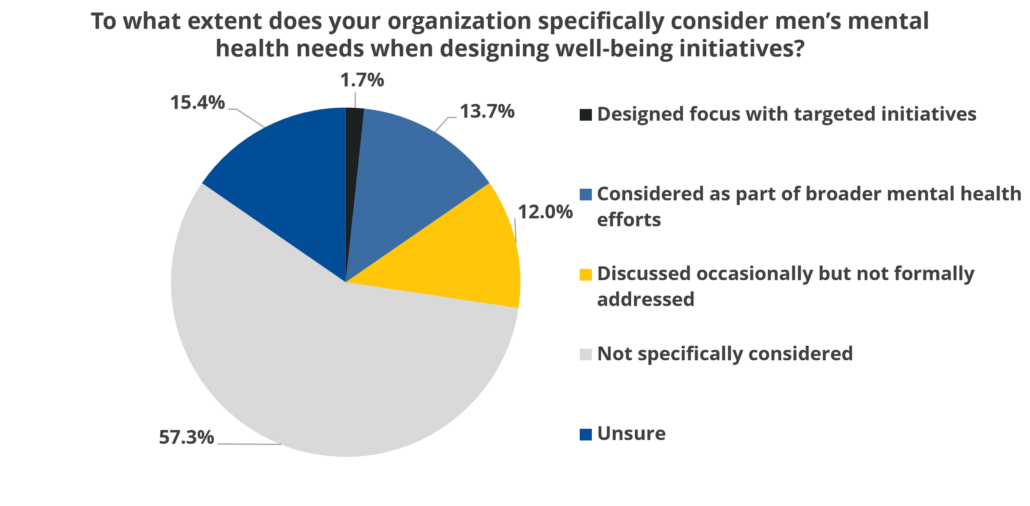
Millions of men experience mental health challenges each year, yet many are less likely to seek professional support due to stigma, cultural expectations, or a preference to handle challenges independently. Our survey suggests employers recognize these barriers, but relatively few have translated that awareness into targeted strategies. More than half (57.3%) of respondents said they do not specifically consider men’s mental health when designing well-being initiatives, while only 13.7% address it as part of a broader mental health strategy, and 12% have discussed the topic without formally addressing it.
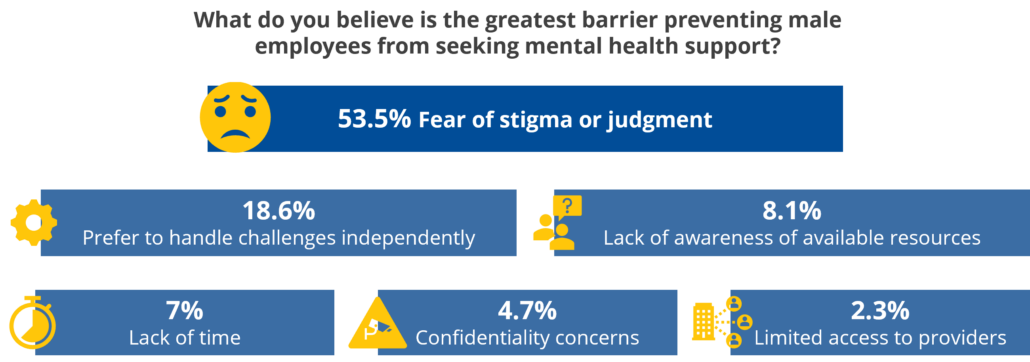
The survey also reinforces that workplace culture remains a significant factor. More than half of employers (53.5%) identified fear of stigma or judgment as the greatest barrier preventing men from seeking mental health support, while another 18.6% believe men prefer to handle challenges independently. These findings imply that improving access to benefits alone is unlikely to change outcomes. Employers are in a unique position to normalize conversations around mental health, encourage help-seeking behaviors, and equip managers to recognize when employees may need support.
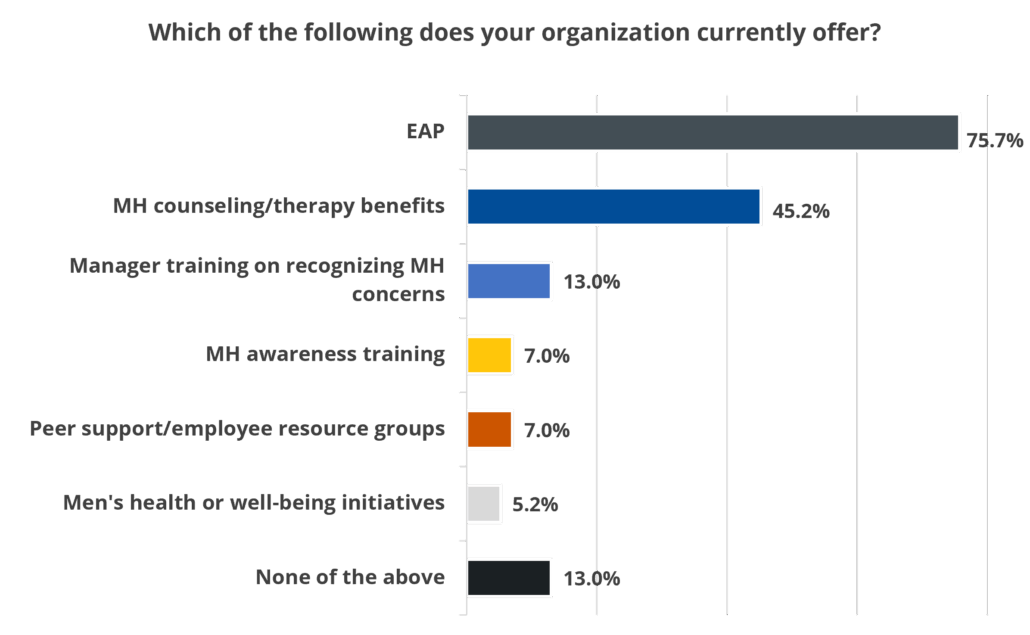
Most organizations have established a foundation of mental health resources, with employee assistance programs (75.7%) and behavioral health benefits through medical plans (45.2%) being the most common offerings. However, proactive initiatives designed to increase engagement remain far less common. Only 13% provide manager training on recognizing mental health concerns, 7% offer mental health awareness training or peer support groups, and just 5.2% have initiatives specifically focused on men’s health and well-being. A one-size-fits-all approach may not adequately address the unique barriers many men face in recognizing, discussing, and seeking support for mental health concerns.
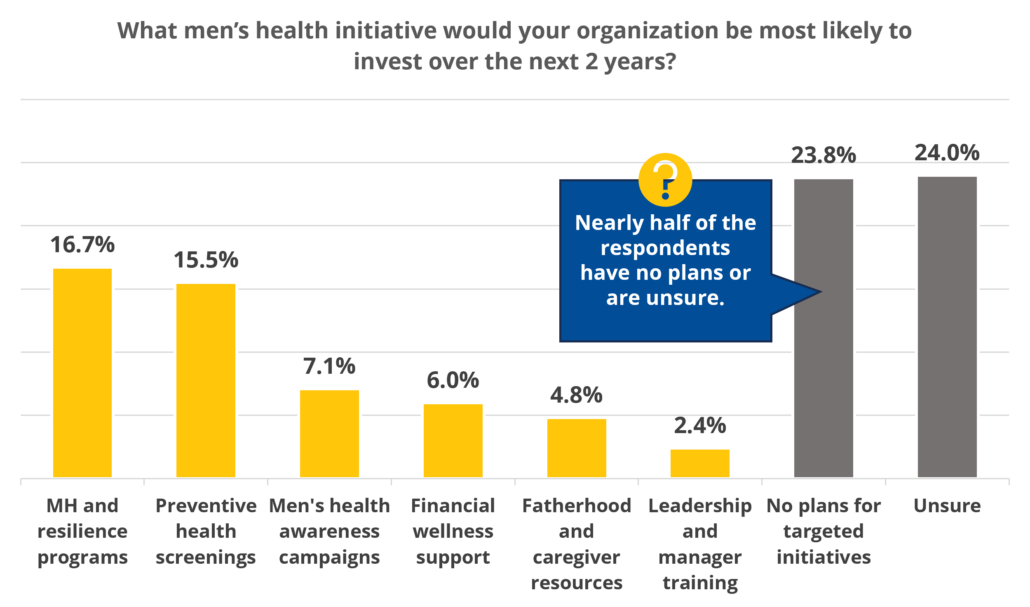
Perhaps the most notable finding is employers’ outlook for future investment. Nearly half of respondents either have no plans to implement targeted men’s health initiatives (23.8%) or are unsure of their future direction (24%). This reinforces that men’s mental health is not yet a strategic priority for many organizations. As awareness continues to grow, employers have an opportunity to move beyond traditional benefits by investing in engagement, education, and workplace culture to ensure employees feel supported in accessing the resources available to them.
Should you have any questions regarding any of this information or want to discuss men’s mental health in greater detail, please contact your local Assurex Global adviser.


Leave a Reply
Want to join the discussion?Feel free to contribute!